
The short answer: a single corporate headshot photographer can photograph around 30 to 40 people a day in standard sessions, or 150 to 300 a day in a high-volume setup. With a bigger team running several stations, it climbs into the many hundreds. The exact figure comes down to how the day is organised and there's a trade-off between how many you get through and how relaxed each photo looks.
These aren't guesses. Were using figures from a recent high volume station I ran and organised at an event in London; where across three of us, my team and I photographed just over a thousand individuals across a 5 hour day. So the numbers below come from the work, not a rule of thumb.
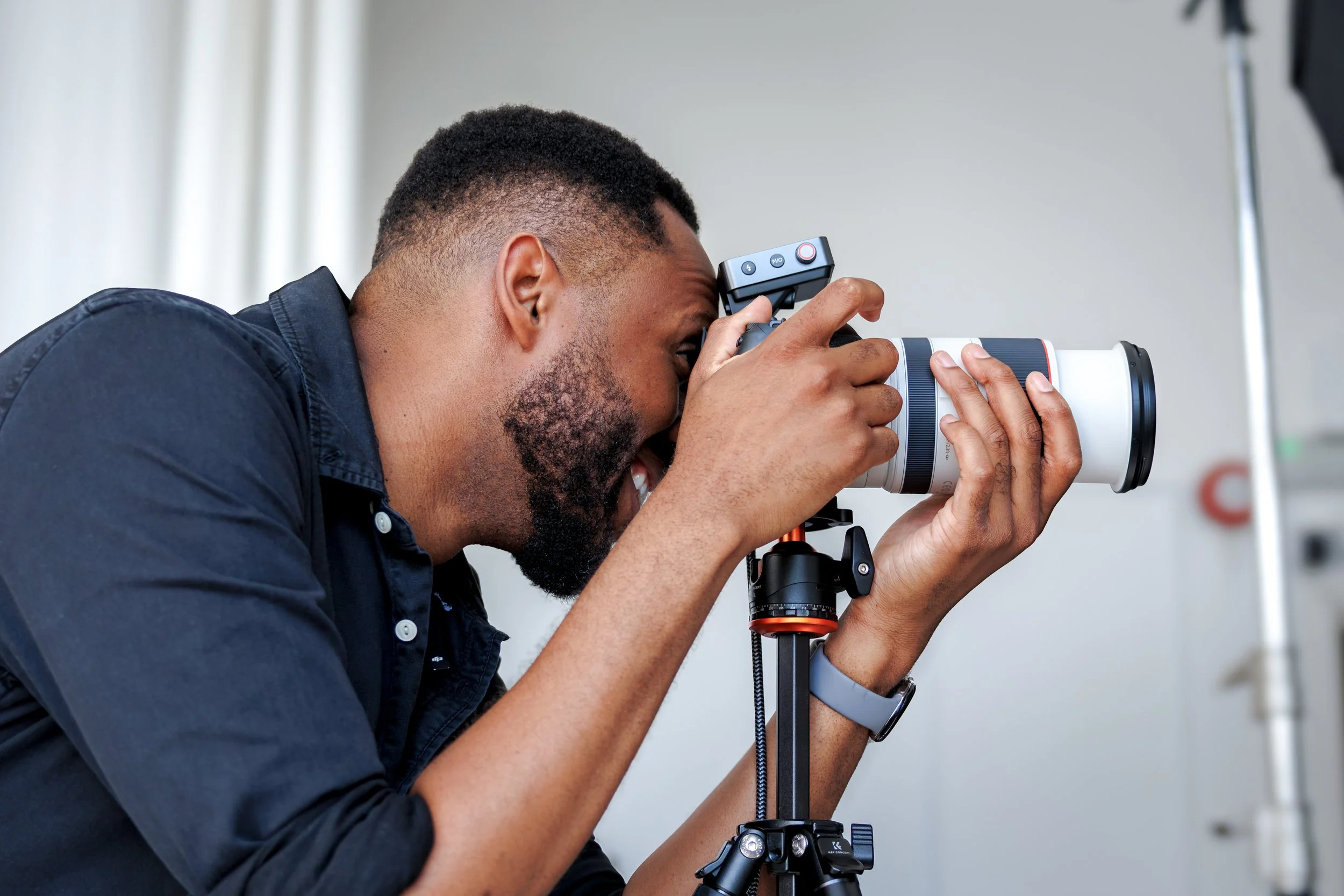
Standard sessions
- Time per person
- ~5–8 minutes
- Per day, one photographer
- 30–40
- The look
- Relaxed, more individual
- Best suited to
- Website, press kit, marketing, LinkedIn
High-volume sessions
- Time per person
- ~1 minute
- Per day, one photographer
- 150–300
- The look
- Consistent, more uniform
- Best suited to
- Events, conferences, internal use (ID cards, Slack/Teams)
What the numbers assume
Both totals assume a well-organised day: a booked running order, people turning up on time in a fixed space and light setup that doesn't get rebuilt between people. That's what "how well organised the day is" really means, without these in place your expected numbers will most likely differ.
The ranges build in a few delays, not a torrent of them. A day with no schedule and or no queue management will wildly drift. A well run one hits the top. For example recently 319 sat right at the top of the high-volume range and a touch beyond it, precisely because the event was well drilled.
Standard sessions: 30 to 40 a day
A standard corporate headshot is about 5 to 8 minutes in front of the camera. Add the time to settle in, try a couple of looks and choose a favourite on the screen, and each person is with me for nearer 10 minutes all in. Across a comfortable day with the usual breaks, that lands at 30 to 40 people.
The reason those slots are longer is that they're doing more. There's room for someone to relax, and that's where the natural, individual shots come from. It's the format you want when the photo has a brand job to do.
High volume: 150 to 300 a day
High volume strips the session back to the essentials: get the person in, posed, photographed and on their way, in around a minute. Run like that, one photographer can move 150 to 300 people in a day. My recent 319 headshots works out at just over a minute a head across five and a half hours, and that pace only holds because everything around the camera is set up to keep the line moving.
It's a different job to a standard session, and it's built for a different purpose.
Why the biggest number isn't always the best
It's tempting to look at 300 in a day and book the biggest number you can. Here's the trade-off, and it's always the thing i take away from high volume sessions.
At around a minute a person, the people who need the most help get the least. For the less camera-confident, the ones who'd normally have me talk them through it for a few minutes until they loosen up, the clock simply doesn't allow it. They still walk away with good, usable photos. They just aren't the very best I could get for them with more time. In a standard session, those are exactly the people I'd slow down for and it shows in the result.
So high volume isn't a lesser service. It's a deliberate choice that suits some jobs perfectly and others less well. The trick is matching the format to what the photos are actually for.
Which format you actually need
It isn't a hard-and-fast rule, but this is what I recommend:
High volume suits events, conferences and photos used internally only: ID cards, the intranet, and Slack or Teams display pictures. When the job is to get a whole room a decent, consistent photo quickly, it's ideal.
Standard sessions suit anything that represents the company outwards: your website, press kits, internal marketing materials and LinkedIn. When a photo is going in front of clients, it's worth the extra few minutes a head.
A simple way to decide: if the image is going in front of clients, go standard. If it's going on a lanyard or a staff directory, high volume is fine.
Going bigger: more of the team
Those per-day numbers are for one photographer. For the largest events, I bring in more of my team and run several stations at once, so there's no fixed ceiling. It scales to the headcount and the time you have.
Three of my team ran three stations and between us we photographed just over a thousand people in the day, each one in, posed and photographed in generally under a minute. Everyone walked away with a professional headshot as a real asset from the event, which is the whole point.
How the day actually hits these numbers
None of this happens by rushing and what gets you there is a little different for each format.
For standard sessions, it runs off a booked slot list. Everyone has a time, people come down when it's their turn and I keep to the schedule so nobody waits around. Add a fixed lit setup that stays put, clear direction so nobody stands around unsure, and working tethered to a laptop so choosing a shot never holds up the next person. It's the same organised approach behind twenty lawyers photographed in a single Marylebone afternoon.
High volume lives or dies by the plan. At a minute a head there's no slack in the day, so everything is built around keeping the line moving and holding to the running order. That means someone managing the line so there's always a person ready to step in, a quick and orderly check-in that doesn't back up, and a station off to the side with mirrors, lint rollers and a few touch-up bits, so people arrive at the camera already sorted instead of fixing their hair in front of me. With those pieces in place, the numbers look after themselves. When they slip, the whole day slows down.
The answer
So, how many corporate headshots can a photographer do in a day? Around 30 to 40 in standard sessions, 150 to 300 in high volume for one photographer, and into the hundreds with a team. Where you land depends on how well the day is run, and which you should choose depends on what the photos are for.
If you're planning corporate headshots in London for your team or your next event, tell me the headcount, the date, and what the images are for, and I'll tell you whether standard or high volume fits and put a plan together. As a London corporate photographer who does both, I'd rather get you the right format than the biggest number.
FAQ
How many corporate headshots can be done in one day?
Around 30 to 40 in standard sessions, or 150 to 300 in a high-volume setup, for a single photographer. With a team running several stations it goes into the hundreds. The exact figure depends on how organised the day is.
How long does each corporate headshot take?
Roughly 5 to 8 minutes a person in a standard session, or about a minute a head in high volume.
Can you photograph hundreds of people in a day?
Yes, my team and I just completed a day photographing about thousand individuals at a London event.
Does high volume affect the quality?
A little. There's less time to coach people, so the less camera-confident don't get their absolute best shot. The photos are still good and consistent, which is why high volume is ideal for events and internal use, and standard sessions are better for your website.
Should we choose standard or high volume for our website?
Standard, along with anything else client-facing. Save high volume for events and internal-only images like ID cards and staff directories.
