
How to Stand Out in London's Competitive Job Market in 2026
Free headshots for job seekers
Out of work? I'm giving away free headshots
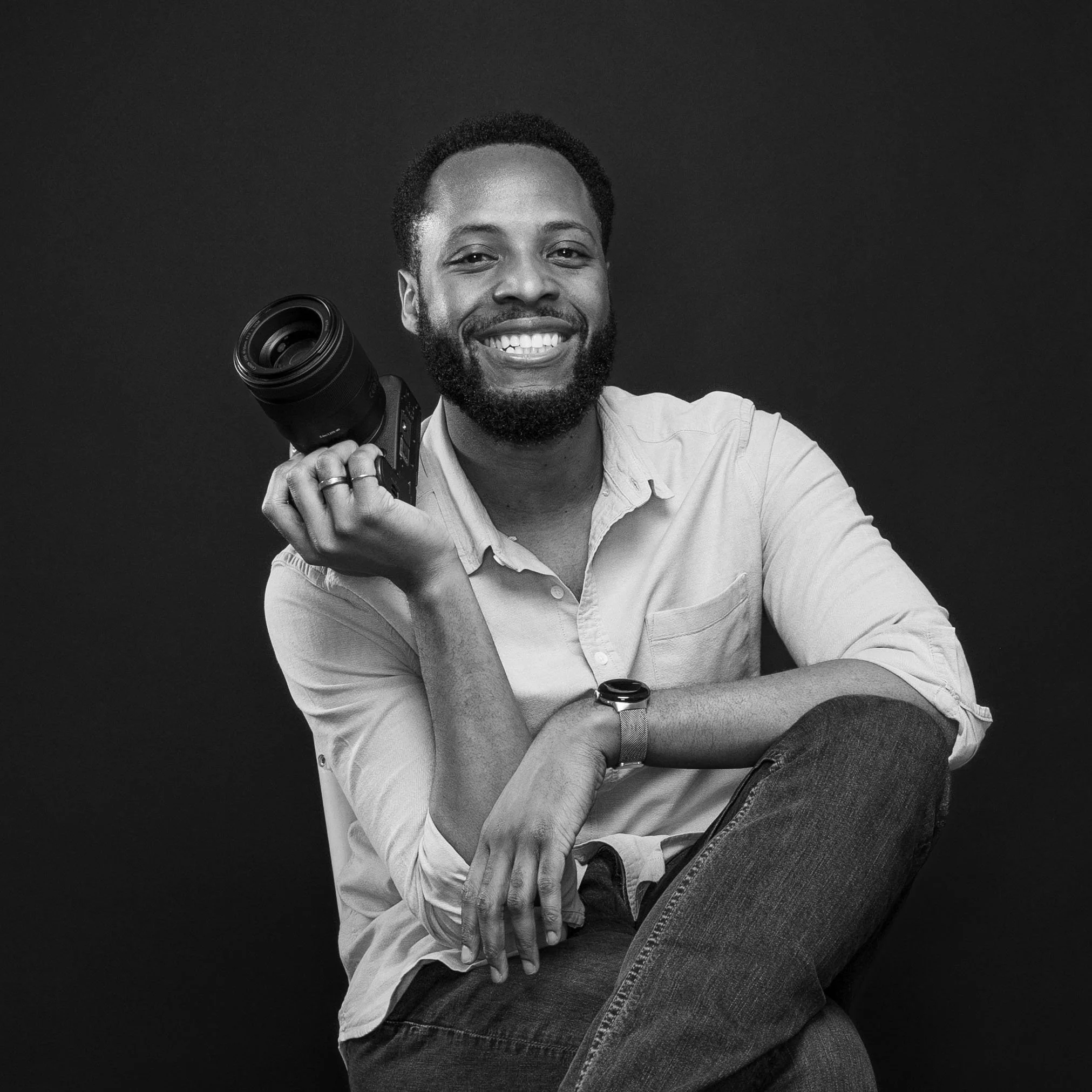
If you're job hunting right now, a good photo is one more cost you could do without. So every month until December 2026, I'm giving away free professional headshots to people looking for work, at a studio in Clapham. It's my small way of taking one barrier off the pile while the market is this tough on people starting out.
Each session takes about fifteen minutes and you'll walk away with at least one edited headshot to use.
Check my Instagram, @shotbyandrew_corp, for the next session →
The London Job Market Reality
If you've applied for a job in London recently, you already know the feeling.
You spend an hour tailoring your CV. You craft the perfect cover letter. You hit "submit" with a little flutter of hope, and then nothing. Radio silence. Meanwhile, you're left wondering if anyone even opened your application, or if it just vanished into the void alongside the other 200 that came in that same afternoon.
Sadly… it probably did vanish. Not because you're unqualified or your CV wasn't good enough, but because there are simply too many people competing for the same roles right now.
The London job market in 2026 isn't just competitive. It's a completely different beast than it was even two years ago. Hiring managers are drowning in applications, vacancies are down, and unemployment is climbing. Your first impression (the one that happens in complete silence, through a LinkedIn thumbnail or profile headline) matters more than it ever has before.
Think about it. When a recruiter is scanning through 300+ applications in an afternoon, they're not reading every word. They're looking for reasons to say "no" as quickly as possible. And most of those decisions happen before you've said a single word.

Why the London Job Market Is Brutally Competitive Right Now
Let's get straight to it: if job hunting feels harder than it did a couple of years ago, you're not imagining things. The numbers back up what you're experiencing.
By late 2025, unemployment in the UK hit 1.83 million people, the highest it's been since 2015 (if we ignore the pandemic chaos). That's a lot of talented people competing for the same roles you're after. Forecasts suggest the unemployment rate could peak at 5.2% by the end of 2026.
This isn't necessarily a sign that the economy's collapsing. It's more of a "correction" after a few years of an absolutely wild job market. Remember 2022, when companies were practically throwing job offers at anyone with a pulse? Those days are over.
There Are Now 2.5 People Fighting for Every Job
Job vacancies have dropped to around 729,000 roles across the UK, well below pre-pandemic levels. Do the maths, and you get a sobering picture: there are now roughly 2.5 unemployed people for every single job vacancy. Just a year ago, that ratio was 1.8.
If you're looking at professional roles in London specifically, it's even tougher. Job postings in the capital have fallen 29% below baseline levels. So not only are there fewer jobs, but the ones that do exist are attracting flooded applicant pools.
Recruiters Are Filtering Faster, Not Deeper
It’s affecting recruiters to; they aren't suddenly working longer hours to review all those extra applications. They're filtering faster.
An HR manager at a London marketing firm recently told me she received 340 applications for a junior content writer role. She spent less than 10 seconds on most of them. Not because she's lazy or doesn't care, she simply doesn't have time to deep-dive into every single CV when the pile is that tall.
So what does she do? She scans LinkedIn profiles. She looks at photos. She reads headlines. She makes snap decisions based on who looks like they have their act together.
More London employers are using LinkedIn as their primary research tool before they even open your carefully crafted application. Your LinkedIn photo, your headline, your "About" section aren't nice-to-haves anymore. They're the gatekeepers.
In this market, standing out isn't optional, it's the only strategy that works. You need to be the person who makes the recruiter stop scrolling.
First Impressions Are Digital Before They Are Personal
Here's a scenario you've probably lived: you're on the Tube, scrolling through LinkedIn during your commute, casually checking out who's applying for roles at your company. Within seconds, you've made judgements. "They look professional." "That photo's a bit casual." "No picture at all? Next."
Now flip it around. That's exactly what recruiters are doing, except they're making decisions about you.
A recruiter I spoke with last month told me she does her first round of candidate screening on her morning train from Clapham Junction. Phone in one hand, coffee in the other, swiping through LinkedIn profiles at 8:15 AM. It takes her about five seconds per profile to decide who makes the shortlist.
Your Profile Gets Scanned Before a Human Ever Sees It

But even before a real person looks at you, there's another gatekeeper: the robots.
Most UK employers now use Applicant Tracking Systems (ATS), software that scans your CV and LinkedIn profile for specific keywords, job titles, and qualifications before a human ever gets involved. If your profile doesn't hit the right notes, it gets filtered out automatically.
And here's where it gets interesting: even after you pass the robot test, the first thing a recruiter actually sees is your photo and headline. Not your skills. Not your experience. Your face.
The Psychology of Visual Trust
There's a reason why this matters so much, and it's rooted in basic human psychology. We make snap judgements based on appearance. Studies show that people form impressions of trustworthiness, competence, and likability within milliseconds of seeing a face.
Fair? Absolutely not. Reality? Unfortunately, yes.
A professional, well-lit headshot signals that you take your career seriously. It suggests attention to detail, self-awareness, and credibility. On the flip side, a blurry selfie taken at a wedding or a photo cropped from a group holiday snap subtly undermines your professionalism, even if your actual qualifications are stellar.
And no photo at all? That's even worse. It makes you invisible in a sea of faces.
The insidious part is that none of this happens consciously. No recruiter sits there thinking, "I'm going to reject this person because their photo isn't good enough." They simply feel more drawn to candidates who look professional. When they're comparing two similarly qualified candidates, the one who looks polished and put-together gets the call.
This isn't about being the most attractive person in the room. I hope to think by now, hiring managers are better than that. No, it's about visual credibility. In 2026, your first impression happens on a screen, probably a phone screen, before you ever shake someone's hand or walk into an interview room.
What Employers Are Actually Thinking Right Now
If you're wondering why that job you applied for three weeks ago still hasn't got back to you, here's what's probably happening on the other side: they're stalling.
Not because they don't need someone, but because they're genuinely unsure whether they can afford to hire right now.
The "Wait and See" Hiring Freeze
Employers heading into 2026 are nervous. Many companies have quietly adopted a "wait and see" approach, essentially putting the brakes on recruitment while they figure out what the economic landscape actually looks like. Rising costs, increased regulatory pressure, and general economic uncertainty have made business leaders cautious about committing to new hires.
What does this mean for you? Hiring timelines are longer, approval processes are stricter, and companies are being extremely selective. They're not just looking for someone who can do the job, they're looking for someone who's a sure bet. Someone who'll hit the ground running.
Skills Are the New Currency
Ok, I know this has been a dark read so far, so how about some good news? While it's harder to get a job, it's actually quite valuable to have the right skills.
2026 is shaping up to be the year where what you can do matters more than what your job title says. Employers are willing to pay premiums for candidates who bring AI literacy, data analysis skills, and professional certifications.
If you've got these in your toolkit and can demonstrate them clearly on your LinkedIn profile, you've got leverage. The harsh reality: employers can afford to be picky right now. So they are.
There's also a growing divide between two types of workers. Knowledge workers in tech, finance, marketing, and creative industries are continuing to successfully negotiate hybrid work and flexible hours. If you're in this camp, your LinkedIn profile and professional image are critical to positioning yourself as a premium candidate.
In a market where employers are hesitant, selective, and flooded with options, you can't afford to leave anything to chance. Your LinkedIn profile needs to scream "I am the safe choice."
What Hiring Professionals Actually Think About LinkedIn Headshots
I reached out to my network (directors, HR managers, recruiters) and asked them point-blank what they think when they see different types of profile photos on LinkedIn. Their answers were illuminating.
"AI Headshots Are Slop"
Let's start with the bluntest response, courtesy of an HR manager at one of London's biggest retailers:
"For your LinkedIn profile picture, know this: AI headshots are slop. Hire a photographer eventually, and in the meantime have someone with a modern iPhone take a photo of you in portrait mode when you're wearing well fitted professional outfit. I cannot stand the AI headshots on LinkedIn."
You've probably seen them. Those hyper-polished, slightly-too-perfect AI-generated headshots that have exploded across LinkedIn. They're cheap, they're fast, and they're incredibly obvious. The skin is too smooth. The background to generic and generally too American. And to anyone who looks at LinkedIn profiles for a living? They stick out like a sore thumb.
"A Real Photo Looks Better Than AI"
A director at a multi-national corporation echoed the same sentiment:
"On LinkedIn, any real portrait (even if its not a headshot) looks better than an AI headshot. Picking a photo you already have and using that on LinkedIn will look better than something created by “AI Headshots Pro”. My advice, go to a professional or use something you already have over AI."
The key word there? Real.
People can tell when you're hiding behind technology. Even a casual-but-professional photo you already have comes across as more authentic and trustworthy than a computer-generated image that's been polished within an inch of its life.
Why Does This Matter?
AI headshots signal something to the person viewing your profile. They say: "I took a shortcut." They say: "I didn't think this was worth investing in properly."
And in a market where employers are looking for reasons to trust you, to believe you're serious, starting with something fake is a terrible first impression.
What Should You Do Instead?
The consensus from actual hiring professionals is pretty clear:
Option 1: Hire a professional photographer. Yes, it costs money. But it's a one-time investment that can genuinely change how you're perceived.
Option 2: Use a high-quality photo you already have. Got a recent photo from a work event where you're dressed professionally and the lighting is decent? Use that.
Option 3: Ask a friend with a decent phone camera. Modern iPhones have portrait mode for a reason. Find a friend, put on your professional outfit, stand near a window with good natural light, and take 20 photos until you get one that works.
Quick Wins That'll Instantly Improve Your Job Prospects

You don't need a complete career overhaul to improve your chances. You just need to fix a few high-impact things that most people overlook.
Fix Your LinkedIn Photo
Let’s dispel one thing, your LinkedIn photo (or any for that matter) isn't about vanity. Profiles with professional photos get 14 times more views than those without.
What makes a good LinkedIn photo:
Good lighting (ideally near a window or in a studio)
Simple, uncluttered background
Professional but approachable expression
Shoulders-up framing
Current (within the last 2 years)
If you're going the DIY route: What you wear matters more than you'd think. Clothing looks different on camera than in the mirror. Take photos in two or three different outfits and compare them afterwards. Solid colours usually work best (navy, black, grey, white). Make sure whatever you wear is actually ironed and fits properly.
Also, get your hair sorted before the session. Not "fine enough", actually styled properly. This isn't vanity, it's about looking like someone who takes their professional image seriously.
Beat the Robots: Make Your CV ATS-Friendly
Before a human sees your CV, it's being scanned by ATS software. If the robot doesn't like you, you're out.
Three ways to make the robots happy:
Mirror the job description's language. If the advert says "Large Language Models," use those exact words, not "AI models" or "LLMs."
Quantify everything you can. Instead of "Managed social media accounts," try "Increased social media engagement by 35% over 6 months." Numerical claims are 70% more likely to get shortlisted.
Keep formatting dead simple. No fancy tables, text boxes, or graphics. ATS software often can't read these. Use a clean, single-column layout in reverse chronological order.
Update Your LinkedIn Headline
Your headline is the text that appears right under your name on LinkedIn. Most people waste it by just putting their current job title.
Instead, use it to communicate value and keywords. Compare these:
❌ "Marketing Graduate"
✅ "Marketing Graduate | SEO | Content Strategy | Google Analytics Certified"
The second version is searchable, specific, and immediately communicates what you bring to the table.
Clean Up Your Digital Footprint
Before you apply anywhere, Google yourself. Hiring managers do this. If the first thing that comes up is your embarrassing Twitter rant from 2019, that's a problem.
Set old social media accounts to private, remove any posts you wouldn't want a future boss seeing, and make sure your LinkedIn is the top result when someone searches your name.
Small Advantages, Big Differences
Look, I'm not going to sugarcoat it: the London job market in 2026 is tough. More people are competing for fewer roles, and employers are being pickier than ever. That's just the reality.
However, don’t forget, you're not powerless in this situation.
While you can't control how many people apply for the same job, or whether a company decides to freeze hiring, you can control how you show up. And in a market this competitive, that matters more than you might think.
A professional LinkedIn photo won't guarantee you a job. Neither will a perfectly tailored CV or a polished headline. But each of these things gives you a slight edge. And when everyone else is submitting the same generic application with the same blurry selfie from three years ago, those small advantages start to compound.
You become the candidate who looks serious. The one who seems credible. The person a recruiter remembers when they're scrolling through 300 profiles on their morning commute.
So here's what I'd suggest: pick one thing from this article and fix it today. Update your LinkedIn photo. Rewrite your headline. Clean up your CV formatting. Just one thing.
Then tomorrow, do another.
Because the uncomfortable truth is this: your competition isn't taking these steps. They're still hitting "Easy Apply" and hoping for the best.
Which means if you do, you're already ahead.
